

Residential Discipleship Houses
Men who live in our Discipleship homes are given an opportunity to confront their destructive choices, their self sabotaging behavior, and their unhealthy views with the love of God and the guidance of Biblical principles.
One of the major differences between traditional recovery programs and our homes is our emphasis on Christian values and cultivating a personal relationship with Jesus Christ. It is this central spiritual dynamic upon which all aspects of Better Roads are built.
BENEFITS OF ALTERNATIVE CHRISTIAN RECOVERY Houses
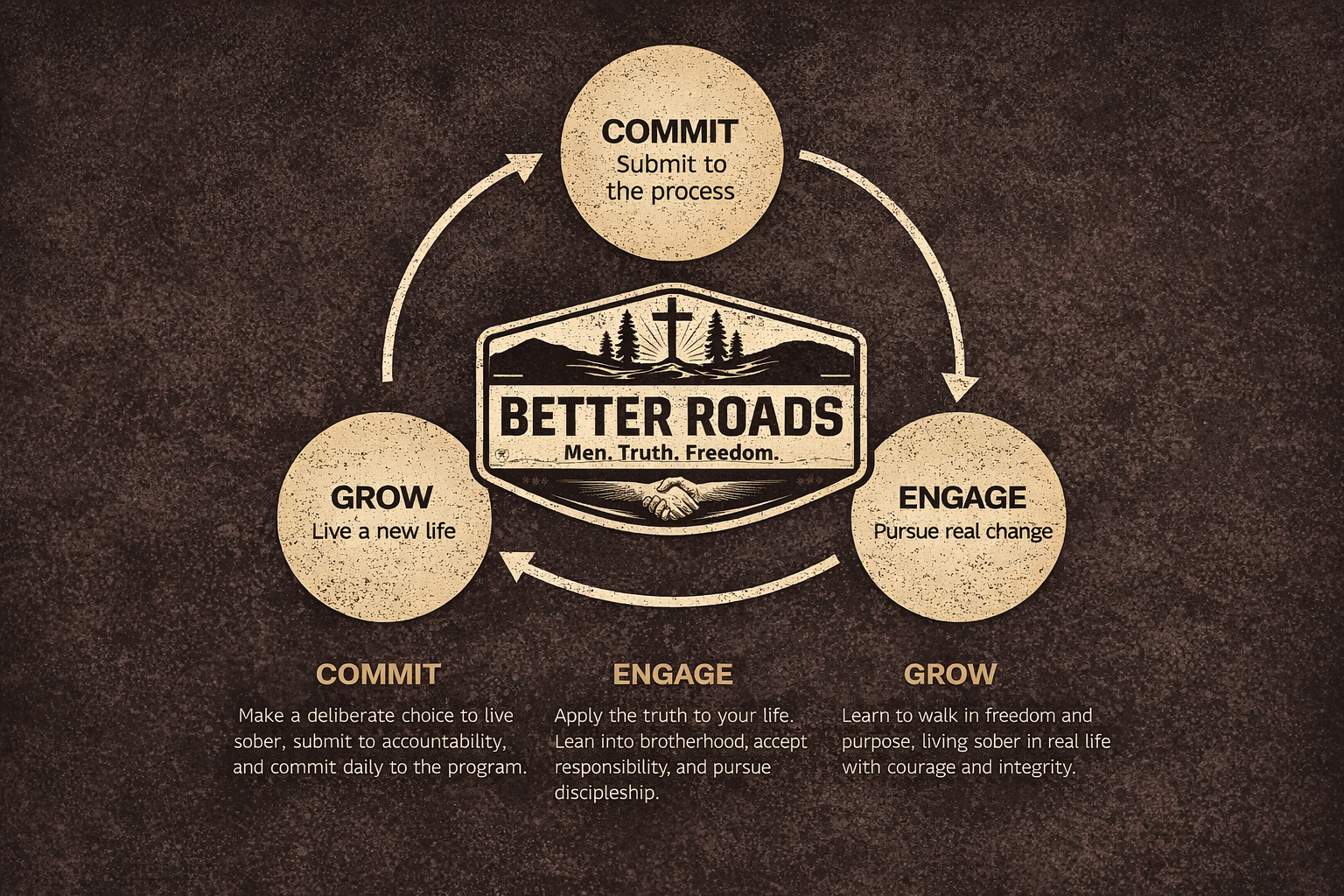
At Better Roads, we do not call them residents or clients. We call them men. Each man is given real ownership in the daily life of the home, because transformation does not happen in isolation. This is not a recovery center. It is a life on life discipleship home, where responsibility, brotherhood, and purpose are rebuilt together.
Through living in the home the men are able to separate themselves from the environments and relationships that have contributed to their life controlling problems.
The men live in a sober, structured environment designed to support growth, not control behavior. Sobriety is not forced. It is chosen daily, as each man learns to walk in accountability, freedom, and responsibility alongside others.
They enter into a loving and supportive Christian community.
They are mentored by others who have walked a similar path to freedom and understand the process they are going through as they grow.
They are positioned to confront the destructive thoughts, beliefs, attitudes, and behaviors that led to their life controlling problems.
Chapel services, Christian growth classes, church attendance, and Christian mentoring help them discover God’s truth for themselves.
They are given the opportunity to cultivate the life practice of personal prayer and daily devotions.
They take part in work programs designed to teach a positive work ethic, responsibility, and pride in a job well done, regardless of the tasks they are assigned to complete. Students are given the opportunity to contribute to their own recovery through their work, by paying rent and taking ownership of their living space, which gives them a sense of productivity and dignity.
Whats Next?
Contact the Intake Staff; request their entry procedures and program details.
Request information about admissions requirements; costs; recreational, educational, and work activities; and post-completion support, as it varies from program to program.
Although many potential students do not initiate contact with potential programs during the admissions process, most programs will want to speak directly with the applicant.